
How to Start Investing with Little Money and Grow Your Wealth Fast
The guide to starting investment with little money: beginner-friendly

One of the most widespread challenges that beginners have to deal with is learning how to invest a little money. Most people think that only those with huge savings, financial advisors, or intellectual power can invest. As a matter of fact, the current tools and platforms have enabled very small sums of money to be used to start investing. This guide gives an understanding of what exactly investment is, why small steps are good to start, and how a beginner can make sure that confidence is built step by step, without the need to risk too much.
What Does Investment Mean to the Novices?
Investment is the act of pledging money to assets to increase it in the future. Investments will yield returns in the form of growth or income or both, as opposed to having cash lying around. Investment is not day trading or making risky investments, especially for beginners. It typically deals with long-term plans like stocks, funds, or automated portfolios that increase over time. Knowing this distinction is of use in eliminating fear and confusion in the initial stages.
The reason why people find it difficult to begin investing with little money

Small investors postponing their investment often believe that it would not be significant to invest small sums. Others fear that they will spend the money, invest in the wrong place, or fail to understand the financial terms. The other widespread source of pain is information overload. Having this number of apps, platforms, and opinions on the internet, novices get paralyzed and do not do anything at all. Such indecisiveness can lose several years of possible development.
The fact is that it is not always safe and educational to wait, but to start small.
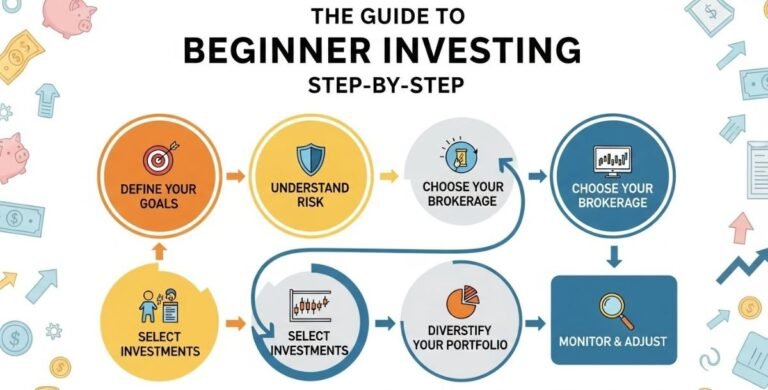
The Step-by-Step Guide to Investing without Much Money
The beginner’s guide to investing with little money using simple tools.
The initial measure is to have a realistic objective. This may be saving to cover an emergency, long-term wealth, or learning the ropes on how to invest. Goals are also clear and assist you in selecting the appropriate tools. Then, determine the amount of investment you can make that will be comfortable. It is possible to start with even $10 or $25 per month. It is the consistency rather than the size that matters. Thereupon, select a platform that is newcomer-friendly. Fractional investing, where you can purchase fractional amounts of stocks or funds rather than whole shares, has been enabled by many apps. Some sites provide an automatic portfolio, and they do the diversification on your behalf.
Top Investment Plans on Small Budgets
Index funds or ETFs are one of the most popular ones. These diversify your funds in numerous businesses, making it risk-free and easier to manage. They are also suggested to beginners due to their low charges and potential for consistent growth. Another feasible solution is robo-advisors. These online services develop portfolios and operate them depending on your risk-taking capacity and aims. They suit individuals having a hands-off style. Fractional stock investment is the best option to invest in well-established firms without significant capital requirements,s while being flexible and permitting you to invest in all stocks.
Advantages of Not Waiting to Start Small

It is important to start with modest money as this will alleviate emotional pressure. Novices can learn how markets operate without losing substantial savings. Any errors that occur will be smaller and can be overcome. Habits are also developed through early investing. The discipline and patience that are taught by the regular contributions are key to long-term success. Compounding has the potential to grow small and consistent investments over time into growth. The greatest thing is that it is the early stage that has an advantage, which sometimes is better than being a big investor later.
Some of the common mistakes that beginners should avoid
Among the pitfalls is the idea of getting rich fast. Due to following the trends or hype investments, there is usually a loss and frustration. The next error is forgetting the fees. The returns can be lowered silently by high fees as you invest little amount. Platform and fund costs are to be checked by beginners. Other novices also discontinue investment in falling markets. Although recessions are not very comfortable, the best long-term investment decisions tend to favor remaining the same instead of being emotional.
Essentials of Becoming a Good Investor

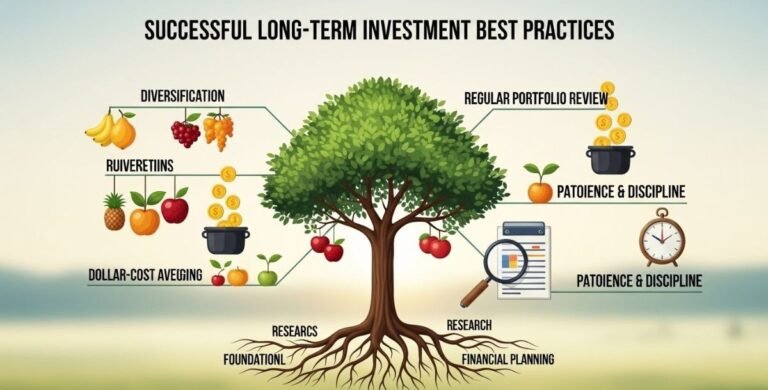
Diversification is key. Dispersing money in various assets takes the risk out and balances the returns over the years. Another practice that is smart practice is the automation of investments. Monthly automatic contributions will eliminate decision fatigue and make you consistent. Last but not least, lifelong learning is important. This is because an in-depth knowledge of such simple concepts as risk tolerance, time horizon, and compound growth will enable beginners to make good decisions further on.
Resources and Software To Get New Investors Started
Numerous investing apps are aimed at beginners. They provide educational materials, minimal startup capital, and user-friendly platforms. Others will involve goal tracking, risk measurements, and rebalancing of the portfolio, which minimizes the need for constant monitoring. These characteristics allow engagement in the investment process to be less frightening and intimidating to first-time users. Such tools will enable beginners to learn to be consistent instead of technical.
FAQs
Will I be able to begin my investment with such a small amount?
Yes, there are numerous investment platforms that can support minimal investment requirements of as little as a few dollars in fractional shares or automated portfolios.
Is there any risk to invest with a low amount of money?
Any investment carries risk, but it works in favor of beginners to limit the amount of losses, and it also allows them to learn at a minimal risk.
What is the most recommended investment to do as a beginner with low capital?
Index funds, ETFs, and robo-advisors are said to be user-friendly because of the diversification and low fees.
What should the frequency of investing by beginners be?
Investing regularly every month is more appropriate than market timing.
Are first beginners better off saving or investing?
Basic savings are good, but to save and invest a little at the same time is a very balanced way.
Conclusion
Knowing how to invest with little money eliminates the largest obstacle the beginner has fear of insufficient. Anyone can start investing with certainty with modern tools, clear objectives, and simplistic plans. It begins small, gains experience, is disciplined, and has long-term potential. The second step is to select a beginner-friendly platform and work with it, regardless of the initial amount being not very big.