Investment basics explained simply for non financial people
Common Types of Investments Explained Simply

The idea of investing can be very confusing and daunting, and something that only finance experts engage in. Most non-finance individuals consider that they must possessa high level of knowledge, vast savings, or insider tips to begin with. Investment fundamentals, in the simplest form, can enable anyone to expand money without fear, so long as they understand how to do it.
What Is Investing and Why Does It Matter?
Investment is an activity of putting money into assets with a view to increasing it in the future. Investing allows money to work instead of lying there in a savings account. They are typically stocks, bonds, mutual funds, and real estate. Long-term financial security is the largest issue to invest in in the eyes of non-financial people. The value of money is diminished slowly due to inflation.
The 10 Things New Investors Should Be Wary of
The majority of the beginners do not invest because they are overwhelmed. Financial terms acquired are complex, and there is the fear of losing money. It is also believed by many that only rich people can invest or that one has to have the timing. Misinformation is another typical pain factor. The beginners are misled by social media trends, hype stocks, and unrealistic promises. In the absence of proper directions, individuals either act emotionally or avoid investing altogether.
The Fundamentals of Investment Made Easy for Non-Finance Individuals

How to Invest Workshop
The principle of investing is rather straightforward. You whip up cash in the present to be increased by the returns in the future. The returns are in terms of price growth, interest or dividends. The greater the duration of investment, the greater the compounding effect. Compounding will make you earn returns on your initial money as well as previous returns. It is the reason why it is better to start small and big rather than start big.
Such Investments and Investing Beginners should know
Stocks constitute ownership in an enterprise. Stock value can go up when the companies expand. Bonds refer to the loans that you provide to governments or corporations at an interest. Mutual funds and ETFs combine the funds of numerous investors and allocate the funds to various assets to lower the risk. The diversified funds can be easier to handle, especially to the beginner, due to the spread of risk on a wide number of companies rather than on a single company.
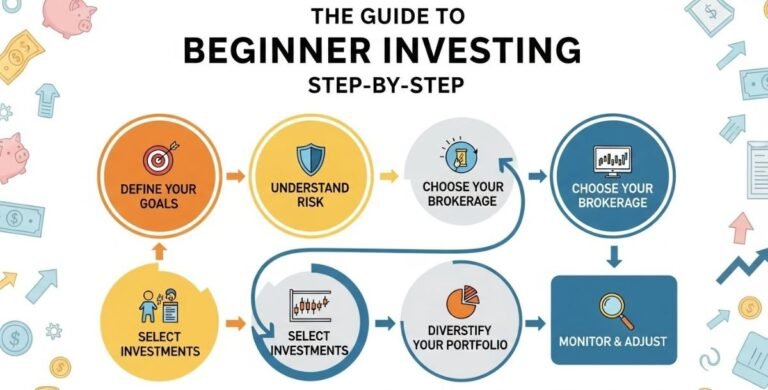
How to Invest Securely in a Step-by-Step Guide.
Step 1: Establish specific financial objectives
Before investing, determine the reason behind investing. The goals can be retirement, increased emergency savings, or wealth in the long term. Clear goals will assist in establishing the degree of risk that one can take and the duration one should remain invested. The short-term goals should be safeguarded by the investments, and the long-term goals can absorb the market fluctuations.
Step 2: Complete Knowledge of your Risk-taking
Risk tolerance is a measure of the level of comfort with price fluctuations. There are individuals who have panic attacks when the markets are not going well, whereas others remain calm. Novices must ensure that they invest in what they are comfortable with and that they make emotional decisions. At the beginning, balanced portfolios tend to work well with non-financial individuals.
Step 3: Select Investment Downs that are easy-going.
The common subjects are low-cost index funds, ETFs, and robo-advisors, which are appealing to beginners. They need little knowledge, are diversified, and have lower fees. Numerous online investment opportunities enable small investments, and hence, investing can be done by anyone. These are tools that deal with complexity and minimise the chances of making expensive errors.
The Major Investment Blunders to be avoided by beginners
Trying to make a fast profit is one of the biggest errors. It is easy to make a loss attempting to time the market or hype. The other sin is investing without knowing what happens to your money. Ignoring fees is also risky. High charges may silently bring down returns in the long run. Novices must always look at ratios of expenses and platform fees. Last but not least: emotional investing is risky. Selling when the market is declining or buying on excitement may be detrimental to long-term growth.
Successful Long-term Investment Best Practices
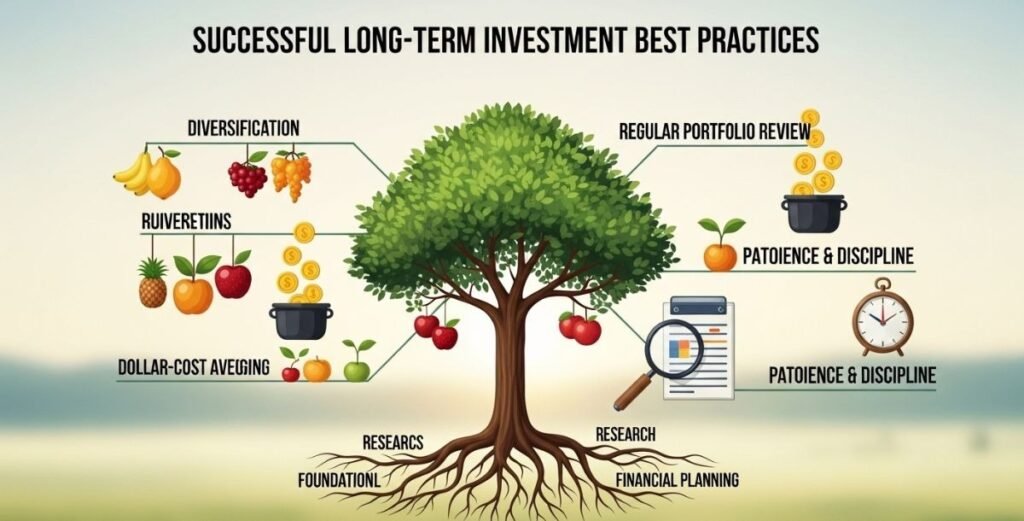
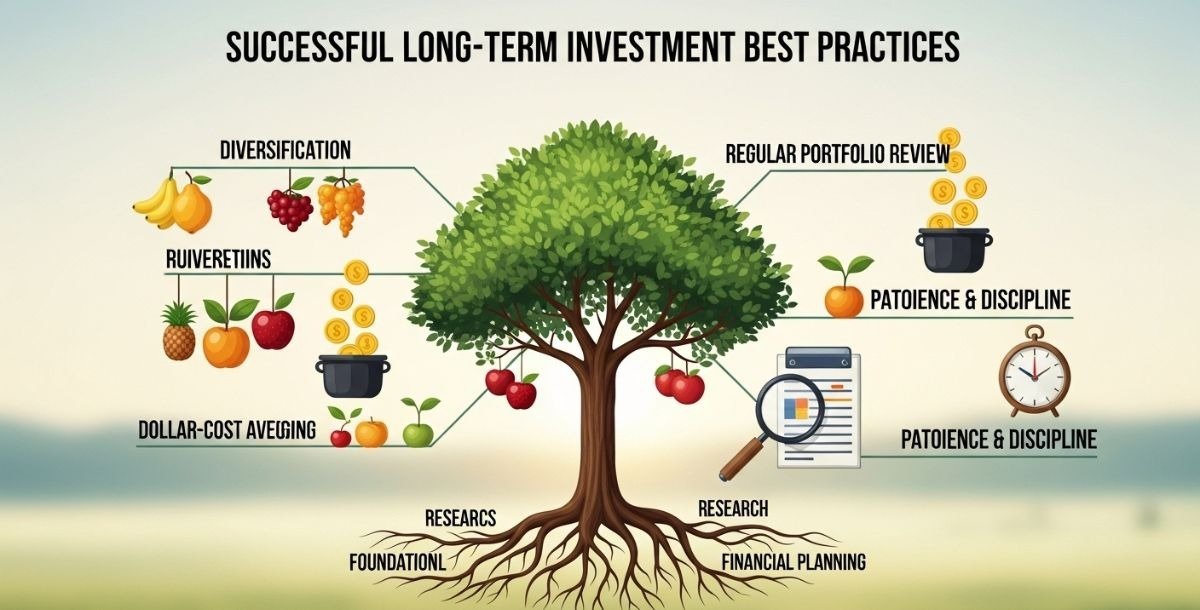
The issue of consistency outweighs timing. Regular low-volume investment disciplines and capitalizes on market volatility. This strategy is referred to as dollar-cost averaging. The other important practice is diversification. Risk is reduced through diversification of investments within assets. Periodically assessing your portfolio can keep it on track, but do not check the daily price changes. Education is ongoing. It is a gradual learning of simple concepts, which helps gain confidence and enhances decision-making.
Investing Made Simple with the Help of Tools and Solutions
The use of modern technology has eased the way of investing by non-finance individuals. Online investments are delivered through mobile applications, computer-robot-advisors, and other platforms that are easy to use. These services usually have automated goal and risk-based portfolios. Some of the educational devices, such as blogs, podcasts, and introductory courses, also contribute to the construction of a background. It helps to make smarter decisions when investing with the help of trusted tools.
The reason Investment Basics Made Simple Works with Beginners
People are encouraged rather than fearful when the basics of investment are elaborated in a simple way. Clear descriptions eliminate the fear and generate confidence. The ability to make decisions by non-finance persons without becoming experts is possible. It is no longer a stressful undertaking to invest. This practice can eventually result in economic stability and autonomy.
FAQs
How much is the minimum required to begin investing?
Most of these sites give you the option of starting with as much as 10 or 50 dollars. It is the consistency that matters and not the amount of the initial investment.
Can an investment be risky for beginners?
Any investment has certain risk involved in it, but by diversifying, investing in the long term, and selecting investments easy for a beginner, one can mitigate risk.
What is the maximum duration of the investment for beginners?
Its best investment in the long run. By remaining invested over the years, one is able to grow wealth through compounding and even out the highs and lows in the market.
Are investments to be made by non-financial individuals themselves?
Yes, even ordinary persons with minimum education and tools can deal with investment without being professionals.
Are professional advice and counseling available to beginners?
Other novices choose personalised advice from financial advisors. Structured investing can also be done using robo-advisors, which is a relatively cheap option.
Conclusion
Simple rules of investment reveal that investment is not for finance experts only. Knowing only the fundamentals and having certain objectives and goals, non-finance individuals can begin investing easily. Think long term, avoid mistakes, and focus on consistency. The second step is not complicated; start learning, select a platform accessible to a beginner, and take the first steps towards financial development.